

Blog / Curtains & blinds
Lined vs interlined curtains: make your home warmer this winter
By Amor Interior Design · 6 minute read
As the evenings draw in and the temperatures drop, we all want our homes to feel warm, comfortable and inviting. While turning up the heating is one option, the right curtains can also help make a difference.
When choosing bespoke curtains, one detail that is often overlooked is what goes between the main fabric and the lining. Standard lined curtains look beautiful, but adding an extra layer of interlining can transform their appearance and help make a room feel cosier during the colder months.
So, what is the difference between lined and interlined curtains, and is it worth investing in that extra layer?
What are lined curtains?
Lined curtains have two layers: your chosen decorative fabric on the front and a lining sewn to the back. The lining protects the face fabric from sunlight, helps curtains hang neatly and gives them a more polished finish.
They are a popular choice for everyday curtains and work beautifully in a wide range of fabrics, from lightweight linens to patterned cottons and heavier upholstery-style materials.
Best for: a neat, elegant finish, protecting your chosen fabric, and a lighter curtain that works well in many different rooms.
What are interlined curtains?
Interlined curtains have an additional layer of soft, padded material sewn between the main fabric and the lining. This creates three layers rather than two, giving the curtains extra body, softness and insulation.
Interlining is a traditional choice for handmade curtains, particularly in period properties, country homes and rooms where a luxurious finish is desired.
As well as adding warmth, interlining gives fabric a fuller, more generous drape. Pleats look softer, folds appear deeper, and even a simple fabric can take on a beautifully rich appearance.
There are different weights of interlining available, allowing the finish to be tailored to the fabric and the look you want to achieve.
Best for: improving insulation, helping reduce draughts, softening outside noise and creating beautifully full, luxurious curtains.
Lined vs interlined curtains: what’s the difference?
2 layers
Standard lined curtains
- Two layers of fabric
- A neat, tailored appearance
- A lighter drape with less fullness
- Helps protect the main fabric from sunlight
- Generally more affordable
- Suitable for most rooms and curtain styles
3 layers
Interlined curtains
- Three layers of fabric
- A fuller, softer and more luxurious appearance
- An additional layer that helps reduce heat loss through windows
- Can help reduce the feeling of draughts and soften outside noise
- Requires more fabric, materials and skilled making time
- Heavier curtains that need suitable poles or tracks
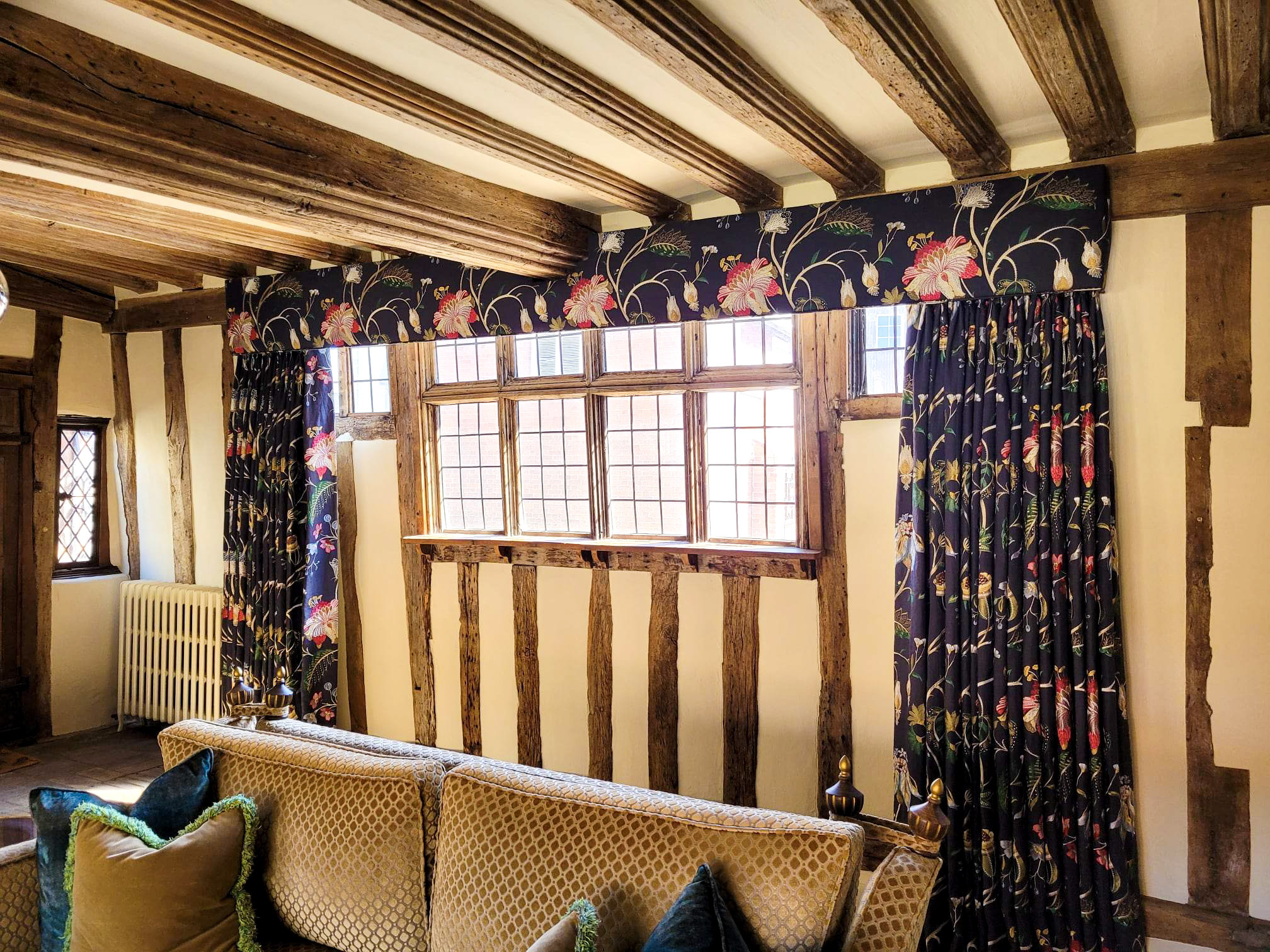
Why choose interlined curtains for winter?
Help keep the warmth in
Windows can be a significant source of heat loss, particularly in older properties or rooms with large windows. Interlining adds an extra insulating layer to your curtains, helping reduce heat transfer and making the area around the window feel more comfortable.
Although curtains cannot replace good glazing or draught-proofing, choosing interlining can be a useful extra step towards creating a warmer home.
Reduce the feeling of draughts
If you have ever sat near a window on a cold evening, you will know how quickly the area can feel chilly. Well-fitted, interlined curtains can provide an additional barrier between the room and the cold window, helping to reduce the uncomfortable feeling of cold air around the glazing.
For the best results, consider the curtain length, how far the curtains extend beyond the window and whether the sides can return towards the wall.
Create a softer, more luxurious finish
One of the biggest differences you will notice is how interlined curtains hang. The additional layer gives the fabric more substance, creating deeper folds and a softer, more elegant drape.
This is particularly lovely with traditional prints, linens, velvets and decorative fabrics, where you want the curtains to feel like an important part of the room’s design.
Help soften outside noise
The extra layer of material can also help absorb some sound, making a room feel a little quieter and more peaceful. While interlined curtains will not soundproof a room, they can be a useful addition in homes facing busy roads or in bedrooms where a more restful atmosphere is desired.
Give your curtains a beautiful finish all year round
Interlining is not just for winter. The added fullness and softness look just as beautiful in spring and summer, making it a worthwhile consideration if you want curtains that feel luxurious throughout the year.
Are interlined curtains right for every room?
Not necessarily. The best choice depends on your fabric, window, room and budget.
Choose standard lined curtains if…you prefer a lighter look, are working with a delicate or lightweight fabric, or want a beautiful bespoke finish at a lower cost.
Choose interlined curtains if…you live in an older cottage or period property, have large windows, want to make a room feel cosier, or love the fuller, more luxurious appearance of traditional handmade curtains.
It is also important to consider the weight of the finished curtains and make sure your existing pole or track is suitable.
If you are unsure, our designers can help you choose the right combination of fabric, lining and interlining to achieve the look you want. See our handmade curtains and blinds.
Five simple ways to make your curtains work harder this winter
- Choose floor-length curtains. Where practical, longer curtains can provide better coverage around the window than shorter styles.
- Allow enough width. Curtains that extend beyond the window frame help cover more of the surrounding area when closed.
- Reduce gaps at the sides. Returns towards the wall, where suitable, can help limit draughts around the edges.
- Close your curtains at dusk. Drawing them as the temperature drops helps create an additional barrier between your living space and the window.
- Consider your radiator position. Curtains that cover a radiator can interfere with the circulation of warm air. The right length and design should take your heating layout into account.
Beautifully handmade at Amor Interior Design
At Amor Interior Design, we believe the finishing details make all the difference. Our bespoke curtains are measured and made to suit your home, your chosen fabric and the look you want to achieve.
Whether you choose standard lining for a simple, elegant finish or interlining for extra warmth, fullness and luxury, we can help you find the right solution for your space. With the colder months approaching, now is a wonderful time to think about refreshing your windows.
Visit our Sudbury design centre to explore our fabric collections, discuss your ideas with one of our designers and see and feel the difference between lining options for yourself.
Frequently asked questions
Are interlined curtains warmer than lined curtains?
Generally, yes. The additional layer provides extra insulation and can help reduce heat loss through windows. The overall result also depends on the fabric, curtain fit, glazing and gaps around the window.
Do interlined curtains make a noticeable difference?
They can make a noticeable difference to the feel and appearance of a room, particularly around large windows or in older properties. The extra layer can improve comfort, although the amount of heat retained will vary from home to home.
Are interlined curtains worth the extra cost?
If you want a fuller, more luxurious finish as well as an additional layer of insulation, interlining can be well worth considering. It does cost more because it requires extra materials and skilled making time.
Can any fabric be interlined?
Many curtain fabrics can be interlined, but the best option depends on the fabric’s weight, texture and construction. Your designer can advise on the most suitable combination.
Can interlined curtains also have blackout lining?
Yes. Interlining can be combined with blackout lining where suitable, making it a popular option for bedrooms where you want a fuller curtain, additional insulation and reduced incoming light.
Amor Interior Design: bespoke curtains, blinds and interiors, thoughtfully designed and beautifully made.